


Throttle Body Conversion Guide
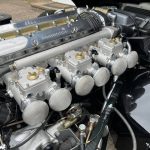
Converting your Road vehicle to run on individual throttle bodies (ITBs) is a rewarding but fairly involved project. Here’s a simple breakdown of what’s typically required:
1. Understanding the Goal
- The SVT Focus uses the 2.0L Zetec engine, which came with a variable length intake manifold tuned for mid-range torque.
- Switching to ITBs improves throttle response, top-end power, and induction sound Sometime it sacrifices some low-end torque and because of the immediate engine response sometime low speed drivability is less smooth.
- It also requires engine management changes—the stock ECU can’t easily handle ITBs without modification.
2. Hardware Required
- ITB’s / Throttle bodies: Either custom-fabricated or off-the-shelf kits (e.g., Jenvey Dynamics, OBX, GSXR motorcycle throttle body conversions).
- Manifold: To bolt the ITBs to the Zetec cylinder head.
- Throttle Linkage: To synchronize throttle plate opening.
- Air Horns/Velocity Stacks: For smoother airflow and tuning.
- Filtration: Foam socks or a custom airbox—running open trumpets on the street isn’t advised.
- Fuel Rail & Injectors: Depending on your setup, you may need aftermarket injectors and a custom fuel rail.
Jenvey offer complete kits that work for many applications: Throttle Body kits | Jenvey
3. Supporting Systems
- Engine Management: Standalone ECU (DTAt, Emerald, OMEX, Haltech, etc.) or a heavily modified stock ECU. This is non-negotiable, as ITBs change airflow dynamics completely.
- MAP vs. TPS: ITB setups usually tune using Alpha-N (TPS-based fuel mapping), sometimes with a MAP sensor plumbed into a vacuum manifold for idle/cruise corrections.
- Vacuum Source: For brakes, PCV, and other systems, you’ll need a small vacuum plenum connecting each runner.
4. Installation & Tuning Steps
- Remove the stock intake manifold and supporting components.
- Install the ITB adapter manifold and throttle bodies.
- Set up throttle linkage and ensure even plate synchronization.
- Install injectors, rail, and connect fuel lines.
- Wire in the standalone ECU and sensors (TPS, IAT, wideband O₂).
- Build/buy a vacuum plenum to support brake booster and idle air control if needed.
- Fabricate an airbox or install filters for protection.
- Tune on a rolling road/dyno—this is critical for drivability and reliability.
5. Considerations
- Cost: Expect £2,500–£4,000 depending on Engine / vehicle and ECU
- Use Case: ITBs shine in track and race applications. For street use, you’ll want to accept some compromise in idle stability and cold starts.
- Response: Individual throttle bodies reduce the tie to fill the ports when opening the throttle significant improving the throttle response which also improves the sound.
- Sound: The induction noise is addictive—one of the biggest appeals of this swap.
- Future Upgrades: Works best paired with high-lift cams, headwork, and a raised rev limit to exploit top-end gains
- Development: Once ITB’s are installed it is easy to try different induction lengths, throttle body sizes, injector position, etc. if you have the dyno time and budget. Luckily Jenvey standard kits have already been optimised for you for most use cases.
Note: Jenvey ITB kits are generally engine specific not vehicle specific. We include full packaging drawing for all kits.
Where they are vehicle specific it is clearly stated.

